In 2007, when the Bulungula Incubator was founded, there was no grand organisational plan or clear idea of what it would eventually become. Instead, it started as a crisis response. At the time, a third of babies in our community died from diarrhoea because there was no access to clean drinking water. Infant funerals had become heartbreakingly routine. Something had to be done.
Our first project was crowdfunding to install rainwater tanks for safe drinking water. Building on this initial success, the next steps included rebuilding a local primary school that had collapsed and opening our first early childhood development centre. Over the years, this steady and responsive work has evolved into our comprehensive Preconception to Career programme that supports development across all life stages. Throughout this journey, the mission has remained focused on meeting the needs of our community through approaches that are rooted in and led by the community itself.
Although our founders are still active senior managers, leadership development and succession planning have been a consistent focus since we started our work, and have become more structured and strategic in recent years. Like many organisations that have been led by their founders since inception, Bulungula Incubator must also navigate founder’s syndrome. This is when the identity, decision-making, or ongoing influence of founders can become too central to the organisation, making it harder for new leaders to emerge and for the organisation to evolve as it grows. As co-founder, Réjane Woodroffe has said, the aim since the beginning was to work themselves out of the job, not to become entrenched in it. However, building the necessary capacity for transition takes time and careful planning, particularly in a remote region weighed down by the lack of access to quality education . It is not a single event but a continuous and intentional process.
We have created strategies to promote leadership development in our organisation to facilitate succession planning. Here are our main focuses:
- A central strategy has been to invest in local leadership, which we call “growing our own timber”. Rather than always relying on external recruitment, the organisation has prioritised training and promoting members of the community. Today, 90% of our staff are from the surrounding villages, and 83% of the management team are either born in or are bona fide members of the community. This approach includes both practical on-the-job experience and accredited training offered through our organisation’s Job Skills and Entrepreneurship Programme.
- While specific positions (such as teachers and nurses) are still filled through external recruitment, we are now seeing young people who grew up through our programmes entering tertiary education to study in these fields. We hope many of them will return in future to take up these roles within our organisation.
- We also leverage technology and innovation to build capacity and develop technical skills. For the past two years, our managers have been trained to use AI tools to assist in problem-solving, report writing, fundraising and communications. Because most of our staff speak English as a second language, these tools have been especially helpful in saving time and improving the clarity and professionalism of written communication.
- We also make use of online innovation platforms such as Xero for bookkeeping, and we engage outsourced professional services—such as accounting, legal and paralegal firms—when specific technical expertise is not yet available in-house.
- Leadership structures are designed to support shared responsibility. Managers lead bi-monthly meetings, complete monthly data scorecards to monitor project progress and submit reports through their programme clusters. This reduces siloed work and ensures that key decisions do not depend only on senior leadership. In an organisation that covers a wide range of programme areas, shared leadership helps maintain cohesion and responsiveness.
- Our organisational culture reinforces this. Bulungula Incubator works from a shared open-plan office where everyone sits together. This environment supports humility, trust and mutual respect. Staff are encouraged to take initiative and are given room to grow without being micromanaged. Mistakes are viewed as part of the learning process. The goal is to create a workplace where people feel psychologically safe to lead, experiment and grow.
- These values are also reflected in formal leadership development efforts. Managers participate in trauma-informed leadership training through ongoing workshops led by Nomfundo Mogapi from the Centre for Mental Wellness and Leadership.
- We have worked with organisational development specialist Kudrat Virk, alongside our Board, managers and senior management team, to develop a ten-year succession plan.
- An important outcome of this work has been the formation of our Monthly Programme Circle (MPC). This is a peer leadership structure that encourages collaboration, shared problem-solving, and decentralised decision-making. We have three clusters—operations, health and education—and each cluster leader (“member”) chairs meetings, supports programme teams, and presents directly to the Board.
- To provide structure and focus, our organisation has adopted a ten-year succession timeline. The deadline aims to be ready for a leadership transition within 10 years, or earlier—whenever the conditions are right.
- Community leadership is also reflected at the governance level. The Bulungula Incubator’s constitution guarantees community representation on the Board of Directors, helping ensure that decision-making is community-driven.
- As part of our succession planning approach, our founders take a one-year sabbatical every five years. These sabbaticals are designed to test our organisation’s operation and outcomes without our founders. Even during challenging times, including in the midst of the COVID-19 pandemic in 2021, the sabbaticals have gone ahead. These periods provide valuable opportunities for staff to step up into roles where they take on more responsibility and demonstrate that they are trusted to carry the work forward.
One clear example of this long-term investment in leadership is Lindile Mthiyo, our organisation’s finance and administration manager. Lindile grew up in Nqileni village and was one of the few in our area to complete high school. His career began as a tour guide at the Bulungula Lodge and, in 2008, he became its manager. He later joined the Bulungula Incubator Board in 2014, where he gained deep experience in governance, management and decision-making. In 2018, he took on a full-time role in the organisation as the finance and administration manager. His responsibilities range from payroll and account management to audits, vehicle management, and maintenance coordination. He is currently enrolled in a bookkeeping course through our Job Skills and Entrepreneurship Programme and also serves as the Monthly Programme Circle member for the operations cluster. Lindile’s story reflects the success of our organisation’s long-term leadership development strategy.
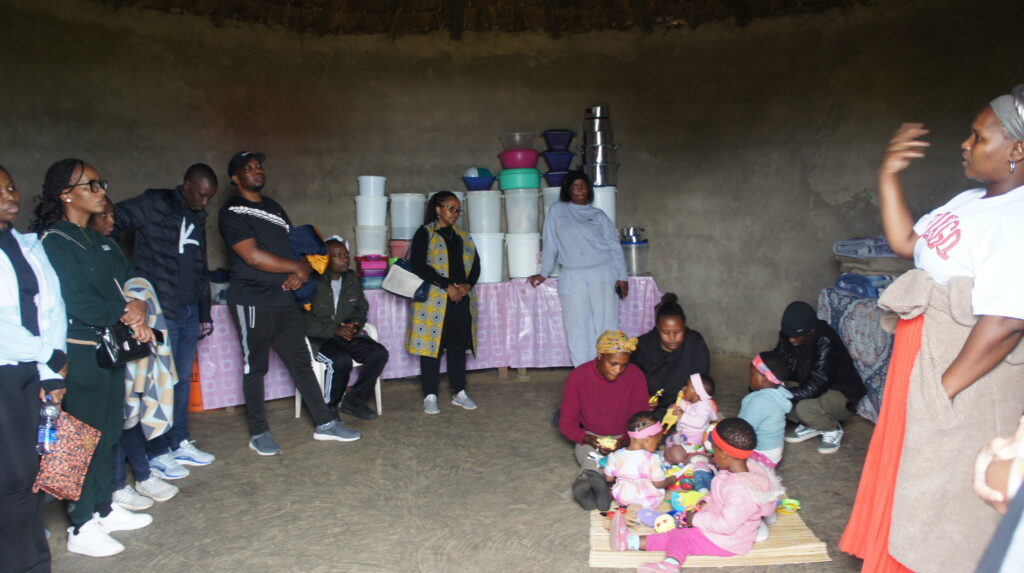
In October, the Bulungula Incubator hosted a learning exchange with ELMA Masana wa Afrika to showcase our leadership development and succession planning to 12 leaders from across Africa—including Uganda, Tanzania, Zimbabwe and South Africa. The visitors had the opportunity to learn directly from our managers and observe how leadership development is being implemented on the ground.
The process of leadership development and succession planning at the Bulungula Incubator is ongoing. We continue to adapt and let it grow in the direction it needs to. Our approach is guided by values that support long-term sustainability for a community-driven, place-based organisation. These include a commitment to people, transparency, trust and adaptability. While the transition is still in progress and we have not yet completed it, we have laid a strong foundation for an organisation that can continue to grow, evolve, and serve our community for generations to come.